
Technical guide to perforated sheet metal in ventilation
Table of Contents
Description Perforated sheet metal
Perforated sheet metal definition: feminine noun (n.f.) describing a flat sheet of metal with holes of various shapes made by punching, drilling, or milling. The result is a metal plate with holes that allow air and light to pass through but prevent objects from passing through, depending on the size of the holes chosen.
What raw materials are used to make perforated sheet metal?
Perforated sheet metal starts as a solid metal plate, i.e., without holes, which is gradually shaped to create round, square, or oblong holes depending on the desired level of transparency or airflow for ventilation. Here is a list of the raw materials mainly used in the manufacture of perforated sheet metal for ventilation:
- SJ35 steel, to facilitate welding of the ventilation box to cover an air conditioning unit or air conditioning system
- Galva Z275, for easy painting of perforated sheets using RAL powder coating, color of your choice
- 304L stainless steel, for parts used in their raw state without any special surface treatment, but be careful of scratches on the sheet metal when it comes out of the forming machine during the perforation process. These scratches can be significant.
- Aluminum 5754 is weather-resistant and remains very lightweight for applications suspended on fragile walls.
- Brass for interior decoration, use in perforated sheet metal for radiator covers and ventilation grilles
- Corten, used in its raw form, for which the architect wants a natural color linked to the oxidation of steel with a rust effect that varies over time.
Use Perforated sheet metal for ventilation and air treatment
Perforated sheet metal is widely used in air and water treatment due to its distinctive features. The perforation technique is frequently used in the manufacture of intake grilles and filtration systems, thereby helping to increase the comfort of spaces. It has a notable application in various equipment such as for concealing radiators, air conditioners and fans, HVAC installations, and HVAC units. Perforated sheet metal plays an essential role in filtration systems, forming the basis of metal filtration supports. Filters made from perforated plates are used to filter air, water, and industrial liquids, finding significant applications in production processes such as the food industry, various industrial sectors, ecological facilities, and wastewater treatment plants, as well as in construction and building. New standards require air comfort in living spaces, as well as in offices and transit areas. Air treatment in public spaces is a real challenge, which is why air return grilles are installed in various locations to better manage the flow of incoming and outgoing air.
Characteristics of perforated sheet metal
The technical characteristics of perforated sheet metal make it ideal for ventilation applications. There are endless combinations available, with each characteristic creating a unique, customized product tailored to the airflow requirements. Perforated sheet metal can be customized using a configurator, giving you complete freedom to design your own product.
- Raw material: the metal filter is primarily made from a raw material for perforated sheet metal. By selecting the right material, you can achieve high mechanical performance and durability for the sheet metal (depending on the environment: indoor, outdoor, urban, mountain, seaside, etc.).
- Dimensions: perforated sheet metal cut to size to fit the space and frame dedicated to air passage. Minimum size of 50 x 50 mm for an air extraction ventilation grille up to panels measuring 1000 x 2000 mm, with a maximum size of 1200 x 2400 mm. The format of the perforated ventilation grille has a direct impact on the calculation of air passage, extraction flow, sheet thickness, and mechanical resistance.
- The thickness of the metal will play a decisive role in both the mechanical strength of the perforated sheet and its appearance and the calculation of pressure drop. Varying from 1 mm to 3 mm, the impact of the thickness of the ventilation grille should not be overlooked. A large ventilation grille will therefore require greater thickness or intermediate reinforcements to ensure its strength. However, the additional reinforcements must not impair the ventilation performance. It is better to bend the perforated sheet metal to give it rigidity without adding additional obscuration.
- The air passage section, often equated to the percentage of empty space, which varies depending on the type of perforation chosen. The two parameters are linked because the percentage of open area multiplied by the actual perforated surface area gives the air passage section in cm². Example: on a 1200 x 800 mm grille, the perforated surface area will be 1155 x 787 mm with an open area of 44%, giving us the following section calculation according to the formula: air passage section =115.5 cm x 78.7 cm x 44%, or 4,000 cm², to obtain the actual air flow opening of the perforated grille.
- Solid edge required for shaping and fixing the sheet metal to the machine frame or ventilation duct. The solid edge of the perforated sheet metal varies from 5 mm to 50 mm depending on your fastening requirements. The size of this non-perforated edge has both aesthetic and technical implications. You can adapt the peripheral edge of the sheet metal to your frame, and even customize each edge to have four different sides, depending on the asymmetrical configuration of your support.
- Fixing holes allow you to attach the ventilation grille to a concrete wall, plasterboard, or metal frame using screws or rivets. You can also arrange the fixing holes as you wish, choosing both the diameter of the holes and their spacing.
- Folding perforated ventilation sheet metal on two or four sides to form a metal cassette. This additional operation adds rigidity to the ventilation grille, sometimes reducing its thickness and therefore its weight. This is particularly useful when the perforated plate is suspended or subject to impact.
- The color can be customized according to your preferences: the entire RAL color chart is available for your ventilation project.
- The safety of installations and personnel is important when using perforated sheet metal in ventilation systems. It is necessary to ensure proper use in all circumstances, from installation to maintenance, including daily use. The ventilation support must:
- Provide mechanical resistance to impact; depending on its location in public spaces, it may be subject to impact or vandalism.
- Hold its own weight if suspended on a wall or support light objects if used as a radiator cover.
- Resist rain, snow, and wind, especially in stormy conditions.
- Avoid injury if your finger gets caught.
- Avoid losing small items (keys, jewelry, coins, etc.)
- Ensure that machines continue to function properly if small objects or insects get inside.
Perforated sheet metal price
The price of perforated ventilation sheet metal varies depending on the technical specifications. Using our perforated sheet metal calculator, you can customize the price per square meter, and the best price per piece will be adjusted according to your configuration. Changing the size can lower the production cost if you can switch to a size smaller than 1200 x 800 mm. The impact on the transport price is significant when using an economical courier service. The same applies to the 1000 x 1000 mm format, which offers a low-cost perforated sheet metal price thanks to optimized cutting. Custom sheet metal cutting at an attractive price allows you to decorate your ventilation duct at a lower cost. For less than €80, you can purchase the perforated sheet metal of your choice.
Types of perforated sheet metal ventilation holes
Patterned perforations allow for several combinations. Over time and depending on industrial applications, certain grilles have become standard perforated sheets for ventilation. Below is a list of available panels in 1000 x 2000 mm format, as well as in 1000 x 1000 mm and 1200 x 800 mm sizes in 1.5 mm thick galvanized steel.
Perforated sheet metal with round holes
Standard round perforation for use in air conditioning and air conditioner unit protection
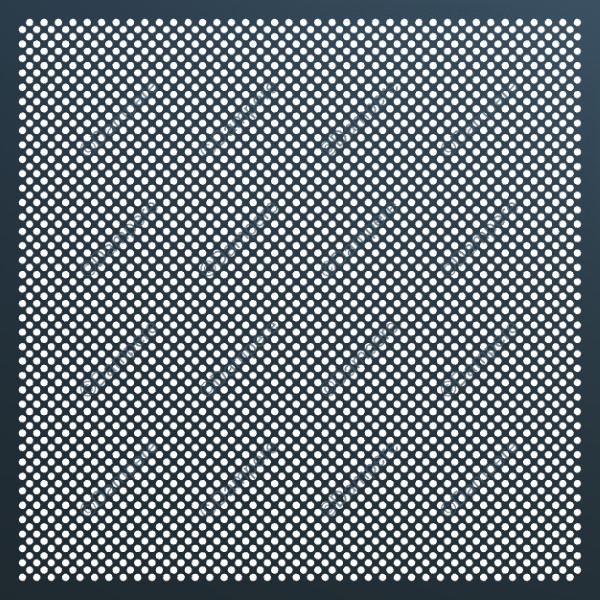
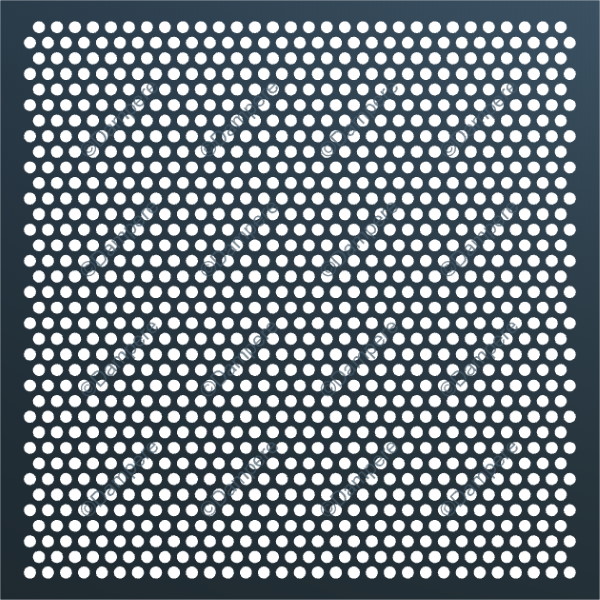
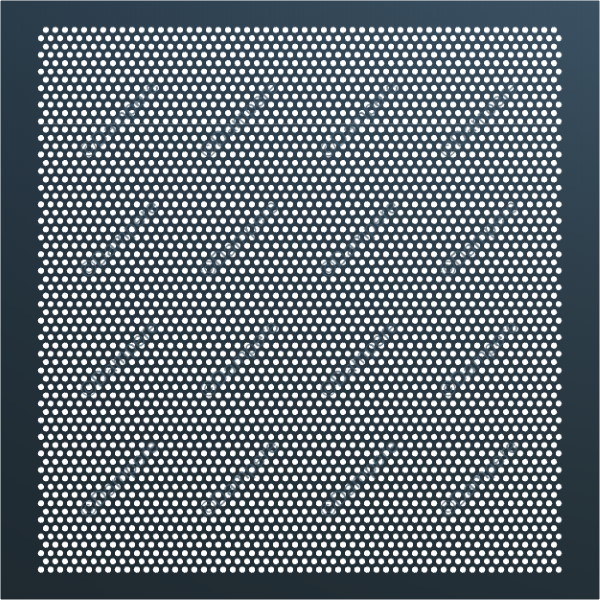
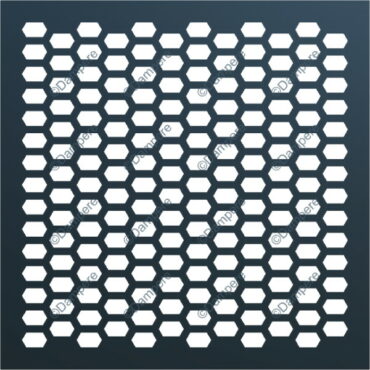
Hexagonal perforated sheet metal
Standard hexagonal perforation used in high-performance ventilation grilles with superior airflow.
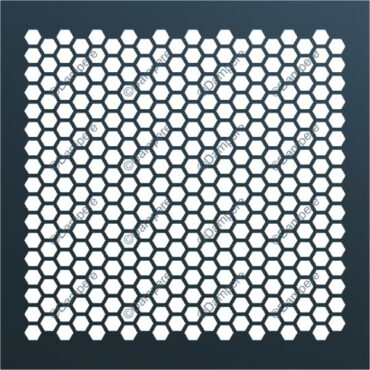
Perforated sheet metal with square holes


Decorative perforated sheet metal for ventilation
The ventilation mechanism incorporates several technical elements with various functions to ensure adequate air treatment. Air intake, ventilation, blowing, and aeration grilles are located at the entrance to the system. Next come the ducts or conduits for circulating and transferring air from one area to another. Finally, there are various machines used for dust removal, drying or humidification, heating or cooling. All these technical components are used for air conditioning and are in sober metallic colors—white, black, gray—without any particular aesthetic finish. Decorative perforated sheets come into play at different stages:
HACV privacy screen
It is important to choose a perforated metal screen that allows adequate ventilation for air conditioning units so as not to compromise their technical efficiency. However, local regulations and zoning laws require that the installation comply with building codes and urban planning regulations. It is desirable to conceal outdoor air conditioning units to preserve the aesthetics of the property and the urban landscape. In public spaces such as restaurants, cafes, or commercial areas, a screen can be used to integrate HVAC units into the environment without disrupting the visual appearance. On office roofs, regulatory constraints may exist regarding the visibility of outdoor HVAC equipment. In such cases, a perforated metal screen will be the solution to remain compliant with local standards.
Air vent grille
Directly installed in workspaces or living areas, these grilles are essential for ensuring uniform air distribution throughout a building, thereby contributing to occupant comfort and system energy efficiency. The use of decorative perforated sheet metal is important to prevent the grille from looking industrial and out of place. Our ventilation sheet metal configurator allows you to adapt the pattern and color to the room in which the ventilation grille is located. Whether applied to the ceiling, walls, or floor, we have an aesthetic solution tailored to your project.
Pipe cover
Plumbing pipes snake through the house, electrical cables sometimes run outside the walls, and air conditioning systems are sometimes installed several years after the building has been constructed. This results in exposed pipes and ducts, which we can conceal using decorative pipe covers.
Express perforated sheet metal
Express perforated sheet metal is not a different pattern or a lesser quality material. Express perforated sheet metal is an industrial organization that allows orders to be scheduled differently in order to save time in production and deliver faster. This results in shorter lead times and reduced processing times, without compromising on convenience or service quality. For any express sheet metal requests, please feel free to send us an email to speed up the processing of your order.
Perforation rules and best practices in sheet metal work
Here are some ventilation guidelines for public spaces. Simple and easy to understand, we have limited the guidelines to general applications to make them accessible to everyone. These guidelines apply to public places such as schools, train stations, hospitals, collective housing, offices, theaters, museums, and other spaces that can accommodate large numbers of people.
- Use a galvanized steel plate, 1.5 mm or 2 mm thick.
- Ensure a peripheral border of 15 to 30 mm for the ventilation grille to fit properly.
- No perforated holes smaller than 5 mm in diameter for painting and for natural removal of dust and impurities
- No open holes larger than 30 mm
- Optimized cross-section with elongated rectangular or oblong hole of 125 mm², i.e., LR5x25 or RC5x25
- Area to avoid for the anti-finger-pinch function with a diameter of 9-10-11-12-13-14 mm
Technical Glossary of Ventilation
Ventilation rate
Depending on the application, a ventilation rate is recommended. The ventilation rate indicates how often the room is supplied with fresh air per hour. To perform this calculation, you need to know the volume of the room (height x width x length = volume in cubic meters).
The ventilation per hour is then calculated as follows: volume x ventilation rate = cubic meters per hour.
Air velocity
Finally, you can calculate the amount of air based on the desired air velocity. This is usually expressed in meters per second. Moving air at high speed (usually 2 to 3 m/s) creates a wind chill effect. The wind chill effect means that the wind feels cooler than the outside wind, even though the temperature has not dropped.
Cross-sectional area
Cross-sectional area of the room (width x height) in square meters
Desired air velocity in meters per second
Blow rate
The speed of the airflow plays a crucial role in thermal perception and comfort.
In the event of insufficient mixing, layers of air at different temperatures form successively, creating what is known as stratification. Conversely, excessive mixing causes air movements that can cause discomfort to occupants. Human thermal comfort depends on a delicate balance. In general, the heat emitted by our bodies must be equivalent to the heat absorbed from the environment. Thus, if the air speed is too high, the exchanges between the body and the environment are disrupted, which can cause occupants to feel cold to varying degrees.
In principle, the supply air flow rate should allow for an air change rate of between 5 and 10 volumes per hour. However, in practice, although the typical value is around 7 to 8, it should not exceed 15 in the context of residential air conditioning and could go up to 30 in industrial air conditioning environments. To quickly calculate the airflow rate, simply multiply the volume of the room in cubic meters by the air exchange rate in volumes per hour. To determine the volume of a room, multiply its length by its width by its ceiling height.
For example, if you want to air condition a room of approximately 50 m³ and achieve an air exchange rate of between 5 and 10 vol/h, the indoor unit should have an airflow rate of between 250 and 500 m³/h.
It is important to then customize the airflow rate, taking into account factors such as the heat gained or lost by the room or its equipment (such as computers and various machines), the humidity level, the type of air vents installed, and their positions. Without this customization, the room may not reach a uniform temperature, or the air velocity may be excessive, causing discomfort.
Pressure drop across a perforated plate
The pressure drop in perforated sheet metal is a fundamental parameter when specifying a grille for the ventilation of a structure. This measurement is derived from an analysis of the ventilation requirements of the building and its equipment, rather than simply the free surface area available, which has no relevance in terms of airflow for the structure. The pressure drop results from the pressure difference observed on either side of the grille. Measured in Pascals (Pa), the linear pressure drop is attributable to the friction of the air flow as it passes through the holes in each perforation.
If the pressure drop is excessive, the air flow supplied and required by ventilation equipment such as HVAC (Heating, Ventilation, Air Conditioning) systems will be insufficient. As a result, the equipment will require more energy to circulate air through the ventilation network and to cool itself. You can imagine this situation by blocking the air intake grille of a hair dryer: the air intake becomes insufficient, causing the motor to overheat as it tries to draw in a larger volume of air.
This phenomenon is similar to what happens when the space housing a heating or air conditioning system is not properly ventilated. The consequences can be costly and even catastrophic in certain sectors of activity, as is the case, for example, with ventilated facades in data centers.
